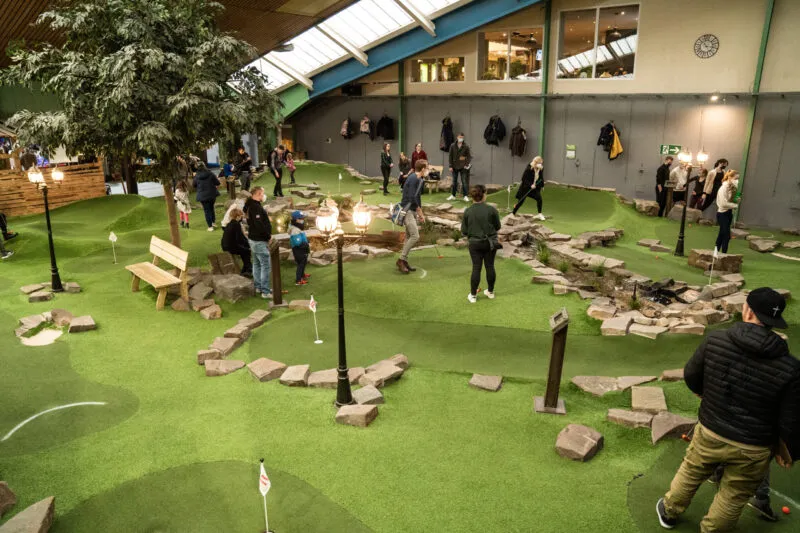
Mini golf has a history as varied as the game itself. Often seen as a family leisure activity, it has grown from modest beginnings into a sport played around the world.
Its origins can be traced to 19th-century Scottish golf courses, where short-game areas were forerunners of mini golf. In the United States, an early mini golf course opened in North Carolina in 1916. Designed by James Barber, it was called Thistle Dhu.
Mini golf, then known as garden golf, became especially popular in the United States during the 1920s and 1930s. Many courses were simple layouts with artificial obstacles such as pipes, ramps and windmills. Interest fell during the Great Depression, when many people considered it an unnecessary expense.
Interest revived after the Second World War. New courses appeared in the United States and Europe, particularly in the 1960s and 1970s. Often part of amusement parks or holiday resorts, they included themed designs alongside more traditional layouts.
As courses developed, mini golf became more demanding. Today, competitions take place at regional, national and international levels, and dedicated players train to improve their skills.
In the 21st century, mini golf has continued to evolve through versions such as adventure golf and UV mini golf. Special designs, 3D effects and unusual settings create new challenges and experiences.
Adventure golf adds themes and obstacles to the traditional game. UV mini golf takes place in a darkened environment, with courses and balls illuminated by ultraviolet light for a distinctive visual experience.
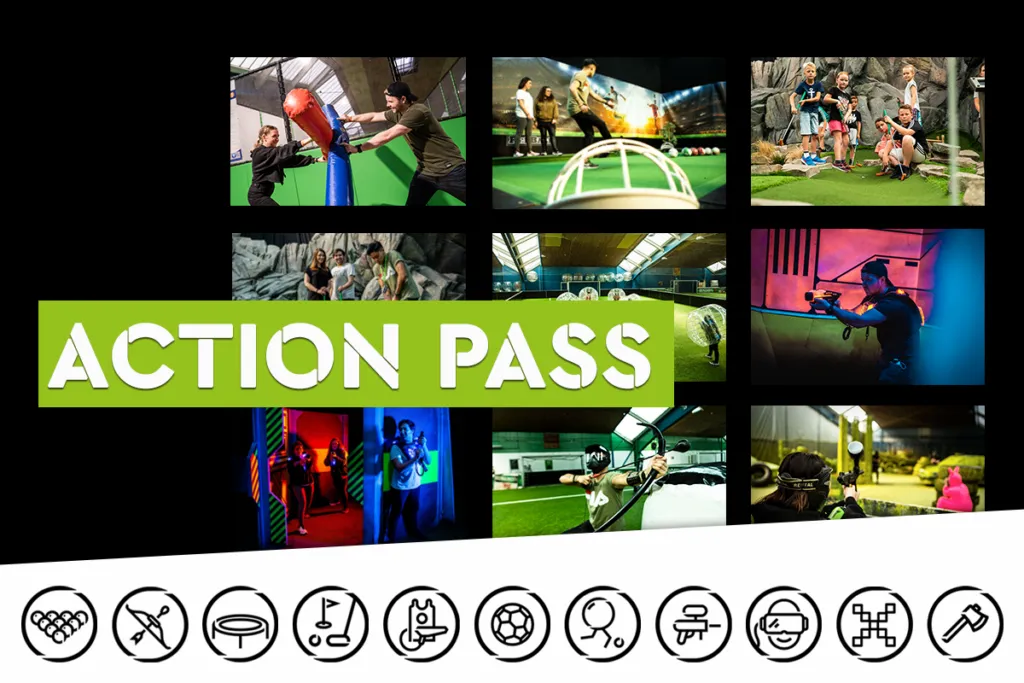
At Alma Park in Gelsenkirchen, you can combine adventure golf with UV mini golf and experience these modern versions together. The game continues to offer fun and challenges for different age groups. Visit the park to try a different approach to mini golf.
 Children’s birthday parties at Alma Park: football, laser tag and food in one package


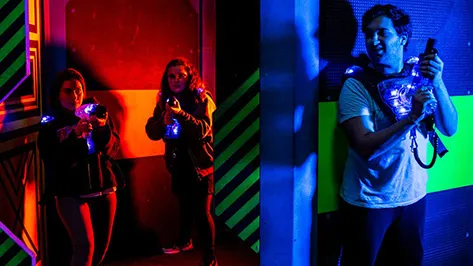
 Laser tag at Alma Park: why Gelsenkirchen is the place for action